On this page
For your first Seoul subway journey, note the line, the direction and the exit number. You can work out the rest one step at a time. There is no need to memorise the network map before entering the station.
Plan a route to the building you are visiting, not just its nearest station. The last walk matters when a station has entrances on several different streets.
Plan the route on your phone
Use Naver Map or Kakao Map to plan the journey and the walk afterwards. Google Maps may also show a public transport route, but use another app if it cannot provide the directions you need.
Before heading down to the platform, note the next station in your direction and where you will change lines. If you want a map to consult separately, Seoul Metro has an official English route map.
Finding the entrance and platform
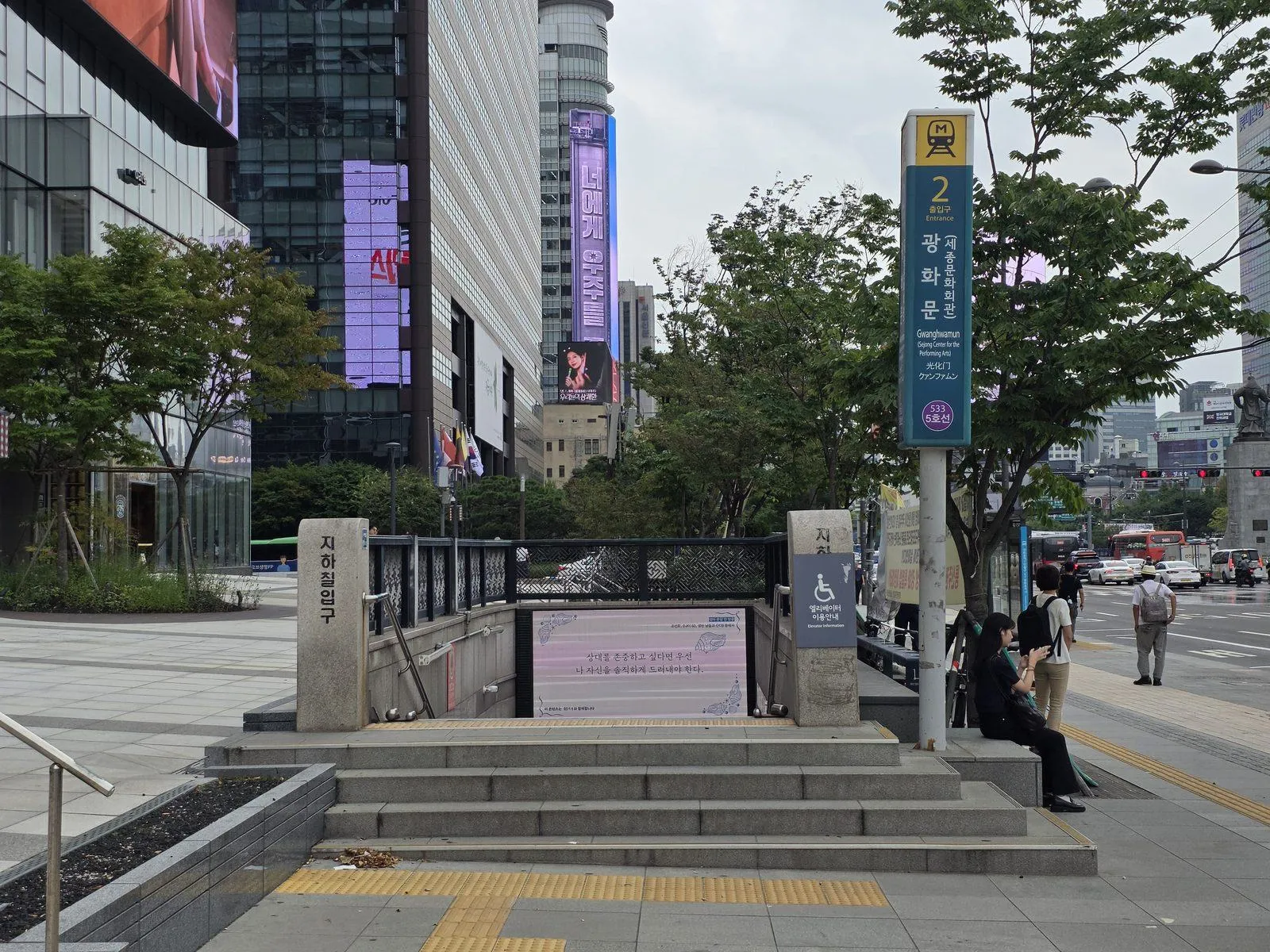
Station signs use line colours, names and numbers to help you identify where you are. Match the station name and line with your route before going downstairs.
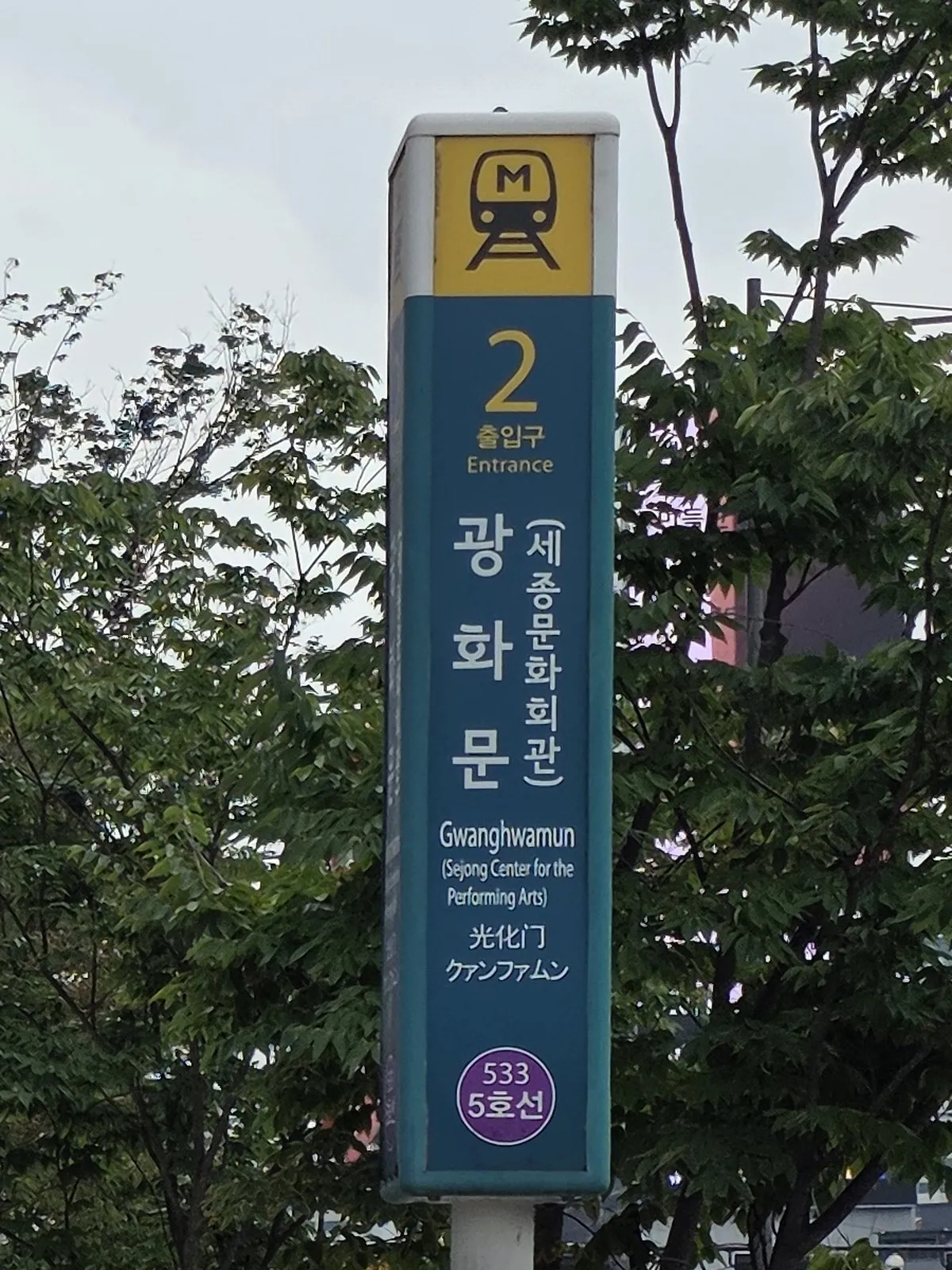
This sign shows the entrance number separately from the station number. You need the entrance or exit number for directions at street level.
Inside, follow the signs for your line, then check the direction using the next station on the route. At an interchange, follow the connecting line’s signs rather than an exit sign unless your route specifically requires leaving.
Tapping through the gates
Have a loaded T-money card or a valid ticket ready. For the subway, each passenger needs their own card or ticket.
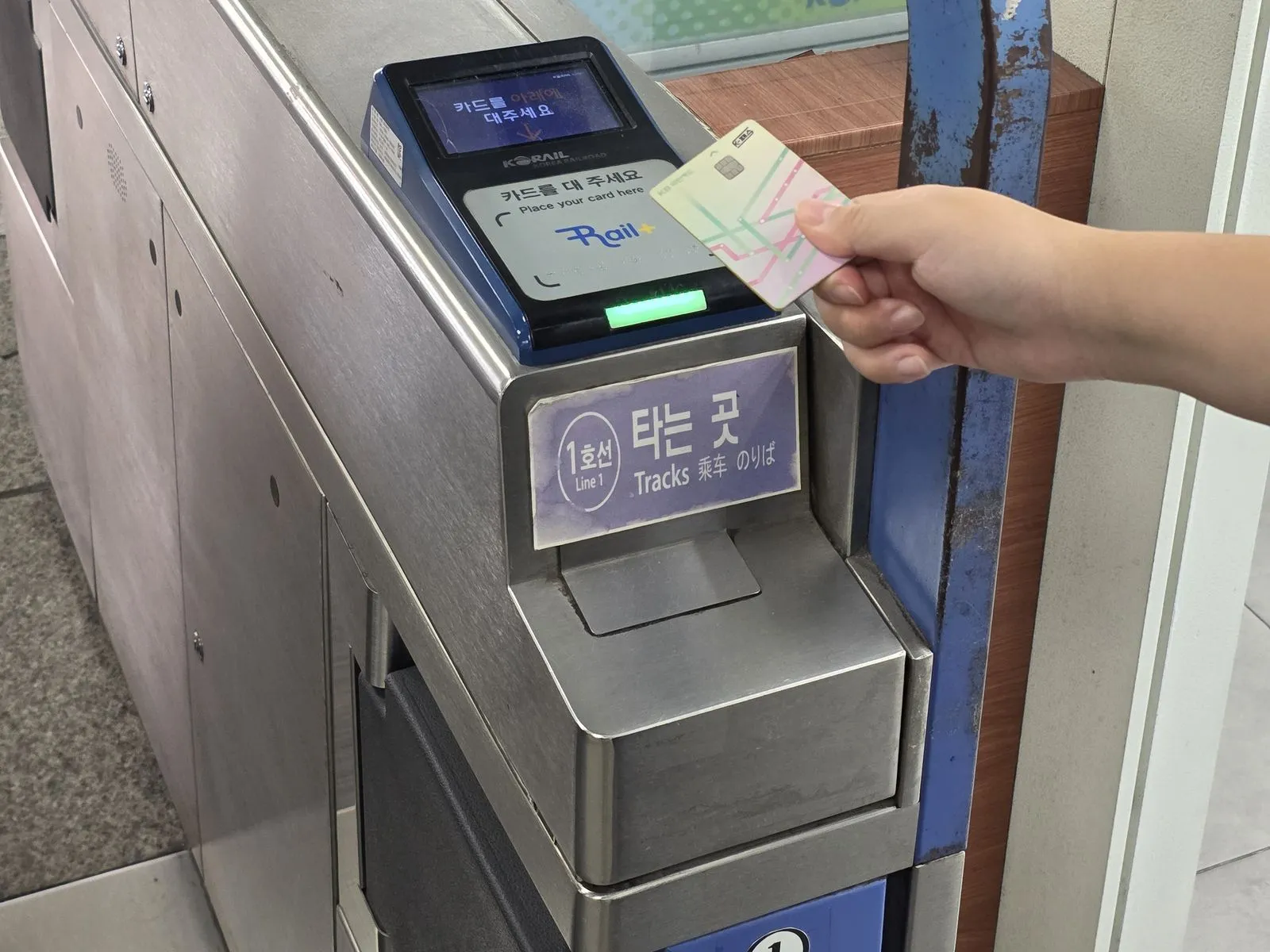
Hold the card against the pad on top of the gate. Tap again when leaving at your destination. Keep the same card for both taps and for any bus transfer.
Tap out every time, even when it feels pointless. Since March 2026, finishing a subway journey around Seoul without tapping out does not just cost you the transfer benefit: the next time you tap in, a base fare is added on top of what you owe. It applies to transport cards, which is what you will be using. See the T-money guide for how the card side of this works.
If the gate reports an insufficient balance or another problem, ask station staff where to add credit or resolve the fare. Do that before leaving the paid area.
What a transfer discount covers
A transport card can link eligible subway and bus journeys under the metropolitan fare system. This avoids paying a fresh full fare for every eligible leg, but it does not make every transfer free of additional charges.
The total can rise with distance, the higher basic fare of a connecting service or a line supplement. The Shinbundang Line, for example, has its own supplementary fare, as explained in the operator’s fare guide.
For a connection between bus and subway or between eligible buses, Seoul’s transport rules require boarding within 30 minutes of getting off. This extends to 60 minutes for the overnight window from 9pm to 7am. Up to four transfers qualify, and the same route or vehicle does not qualify for a repeat transfer discount.
Tap when getting off the bus as well as when boarding. A single journey subway ticket does not provide the same bus transfer benefit as a transport card.
Buying just one subway ticket
Use a station ticket machine and select your destination and the correct passenger category. In Seoul, the single journey ticket is a card you tap at the gate. Its deposit is separate from the journey fare.
After tapping out at your destination, use the deposit refund machine outside the gates to return the card. That machine refunds the single journey card’s deposit, not the balance of a reusable T-money card.
Riding comfortably with bags
Let passengers leave before boarding and keep bags clear of doors and seats. Move a backpack off your back when the carriage is crowded. Keep calls and conversations at a volume that does not disturb the people beside you.
Leave priority seats available for passengers who need them, including elderly, disabled, injured and pregnant passengers. If you need a priority seat yourself, use it. Not every need is visible.
For a step free journey, look for lifts and allow time to find them. A station’s nearest entrance may have stairs, so identify the accessible entrance before walking there with your bags. Give space and priority to passengers who need the lift, and follow the signs at the station.
If you need somewhere to leave a suitcase, compare luggage storage options before travelling to a station specifically for its lockers.
Getting home after an evening out
Check the last train for your route, including every connection. A station being open does not mean there is still a train to your destination.
Seoul Tourism Organization’s subway guide gives broad operating hours, but the departure you need depends on the station and service. Look it up before settling in for the evening. If you miss it, the taxi guide explains the app and payment options.