This page contains affiliate links. If you book or buy through them, we may earn a small commission at no extra cost to you. It never changes what we recommend. See our affiliate disclosure.
On this page
Bring a physical payment card and a small reserve of Korean cash. You can use cards for many everyday purchases, but cash is useful for a vendor that does not accept your card and for loading a physical T-money card.
You do not need to exchange the whole trip’s spending money on arrival. Start with enough for the purchases and transport you have planned, then add to it as you learn what you use each day.
Paying at shops and restaurants
Have your physical card ready at the counter. If you prefer to tap a phone, look for contactless payment support and ask the cashier. A reader that accepts an inserted card may not accept the same card through your phone wallet.
The Apple Pay and Amex guide explains that distinction. If a card is declined, try another payment method rather than assuming every shop in Korea will reject it.
For a market stall or a small purchase, ask how you can pay before ordering. Keep some cash accessible so you do not have to find an ATM with food waiting.
Leave cash for a physical transport card
Buying a T-money card and adding travel credit are separate purchases. Budget for both, including when you collect a card ordered online.
Carry Korean cash for ordinary top-ups at a convenience store or station machine. The new foreign card payment option at Seoul’s ticket machines covers specific ticket products. It is not a general promise that they can load your T-money card.
If you use a compatible iPhone, MobileTmoney offers another route. Mastercard has confirmed overseas card support for its cards through that service. The T-money guide explains the distinction between a physical card, a mobile transport card and a ticket from a machine.
Finding an ATM that accepts your card
Look for international network logos that match your card, such as Visa or Mastercard. These are a useful starting point, although your issuer’s settings, withdrawal limit and the machine can still affect the transaction.
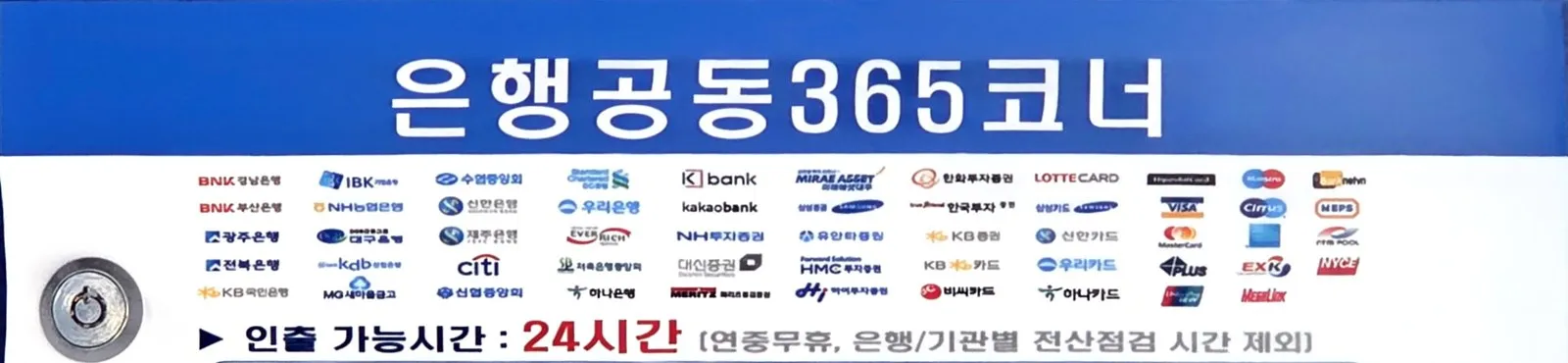
In the photo, the international logos sit on the right of the panel and the operating hours are printed below. Look for that information at the machine you use, then select English if offered.
Read the withdrawal fee before confirming. Your bank may charge separately. If you are comparing an ATM with a currency exchange counter, compare the amount of won you would receive after fees for the same amount of your own currency.
When the screen offers your home currency
A terminal or ATM may offer to convert the transaction into your home currency. This is called dynamic currency conversion. The offer includes its own exchange rate and may include extra fees.
Visa’s guidance says you should be shown the conversion details and given a choice. Choose won if you want your card provider to handle the conversion. Review its overseas fees too, rather than assuming either option is always cheaper.
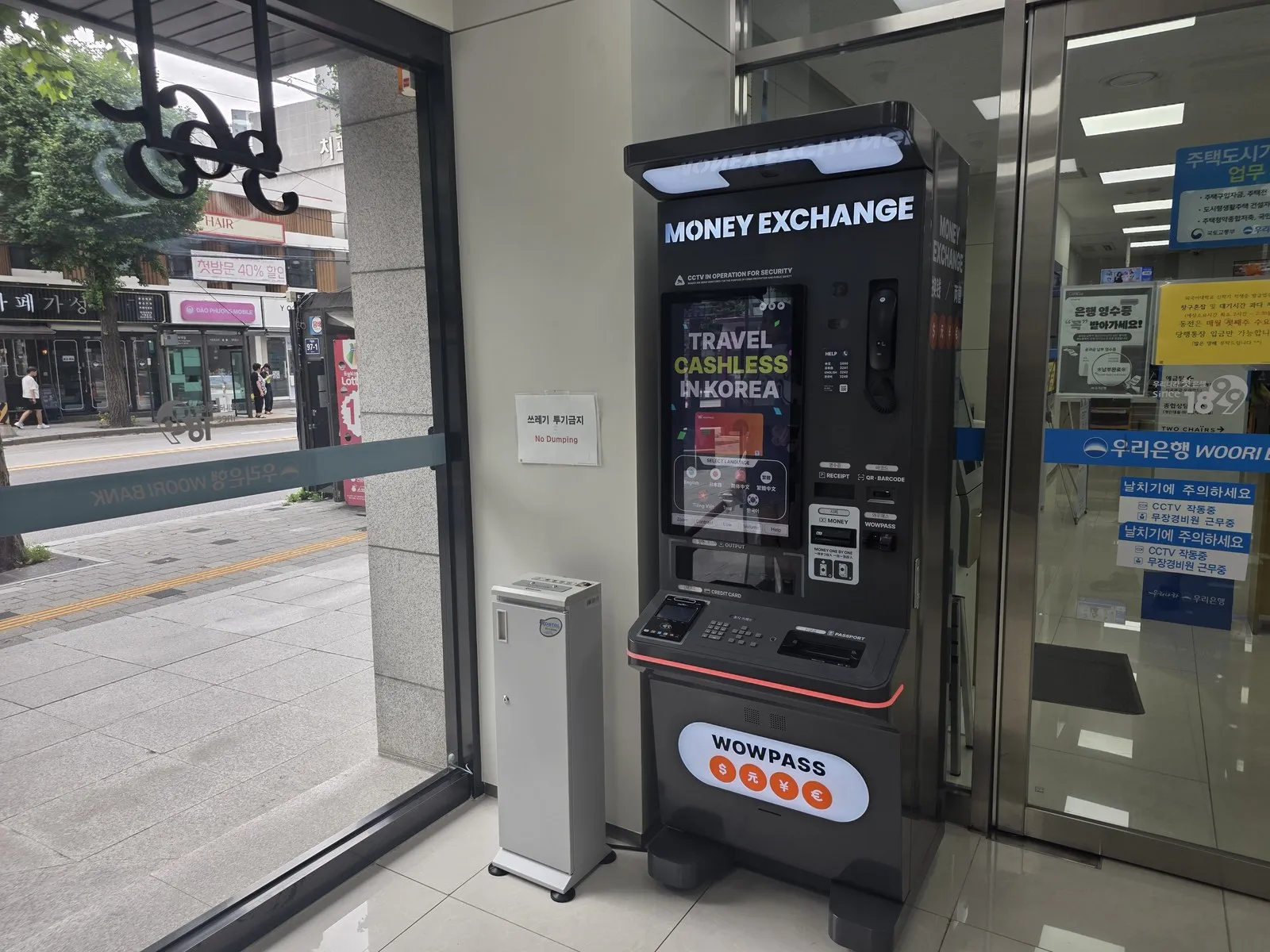
When to consider WOWPASS
WOWPASS is a prepaid card for visitors. It may suit you if you want to load a separate spending balance, but compare its funding and withdrawal conditions with using the cards you already have.
The operator’s usage guide distinguishes two balances. The WOWPASS balance pays for purchases by inserting the card. The T-money balance pays for transport and needs its own top-up. Loading one is not the same as loading the other.
You can compare the WOWPASS offer on Klook before travelling. Read what the selected package includes, where you collect it and how you will fund each balance. A card ordered in advance does not necessarily come with spending or transport credit.
Bring your passport for card collection. For kiosk locations and the methods available to load or withdraw money, use the operator’s app and current guide. Do not rely on an airport kiosk having the same facilities as one in the city.
Getting your first journey paid for
- Decide whether you will use a physical T-money card, a supported mobile card or a separate ticket for your first journey.
- If buying or collecting a physical card, confirm whether any credit is included.
- Add enough transport credit before going to the gate. With WOWPASS, look at the T-money balance, not just the shopping balance.
- Keep your payment card and some cash available for other purchases.
Considering a prepaid card?
Compare the WOWPASS package, collection point and included credit before deciding whether it suits your trip.